

Peptide drug development continues to explore biological pathways beyond GLP-1 signaling. On October 7, 2026, Zealand Pharma announced positive topline results from its Phase 2 ZUPREME-2 trial evaluating petrelintide, an investigational long-acting amylin analog. The study enrolled 220 adults with overweight or obesity and type 2 diabetes in the United States. The findings provide additional clinical data on an alternative peptide pathway involved in metabolic regulation.
According to Zealand Pharma's announcement, the trial met its primary endpoint at week 28. Mean body weight reductions ranged from 7.4% to 9.2% across three petrelintide treatment groups, compared with 2.0% in the placebo group. The company reported HbA1c reductions of up to 0.65% in the treatment groups, while the placebo group showed an increase of 0.23%. Discontinuation due to gastrointestinal adverse events was reported in 1.9% of participants receiving petrelintide and 1.7% receiving placebo. These are preliminary, company-reported topline results. Full clinical data, including more detailed statistical and safety analyses, are needed for a complete assessment.
Petrelintide is an investigational long-acting analog of human amylin, a peptide hormone produced by pancreatic beta cells and released alongside insulin in response to food intake. Amylin signaling is involved in appetite-related processes and metabolic regulation. Scientists are investigating this pathway as a distinct area of peptide drug research alongside the more widely studied GLP-1 receptor pathway. Petrelintide is being developed for potential once-weekly administration. It remains an investigational drug candidate and should not be confused with an approved treatment.
GLP-1 and amylin are different signaling systems involved in physiological responses to food intake and metabolism. Research into these pathways may help scientists better understand how different hormonal signals interact, how candidate compounds behave in clinical studies, and how their safety and efficacy profiles differ. However, findings from petrelintide cannot automatically be applied to other amylin analogs or to unrelated research peptides. Each compound requires its own evaluation.
The earlier ZUPREME-1 program investigated petrelintide in people with overweight or obesity without type 2 diabetes. Together, the two Phase 2 programs contribute to the clinical development evidence for this investigational compound. The populations, study durations, and trial designs differ, so their numerical results should not be directly compared without reviewing the complete study data.
Zealand Pharma and Roche have initiated a Phase 3a development program consisting of three trials designed to further evaluate petrelintide in different populations with overweight or obesity. These later-stage studies will be important for assessing the candidate's longer-term efficacy, safety, and potential role in clinical care. Positive Phase 2 topline findings are an important development milestone, but they do not establish regulatory approval or prove that an investigational compound is suitable for individual use.
The latest ZUPREME-2 announcement highlights continued interest in amylin-based peptide research and the investigation of metabolic pathways beyond GLP-1 signaling. As clinical development progresses, complete trial reports, independent scientific evaluation, and regulatory review will be essential to understanding the significance of these findings.
Original Article | ClinicalTrials.gov | Petrelintide Development Program
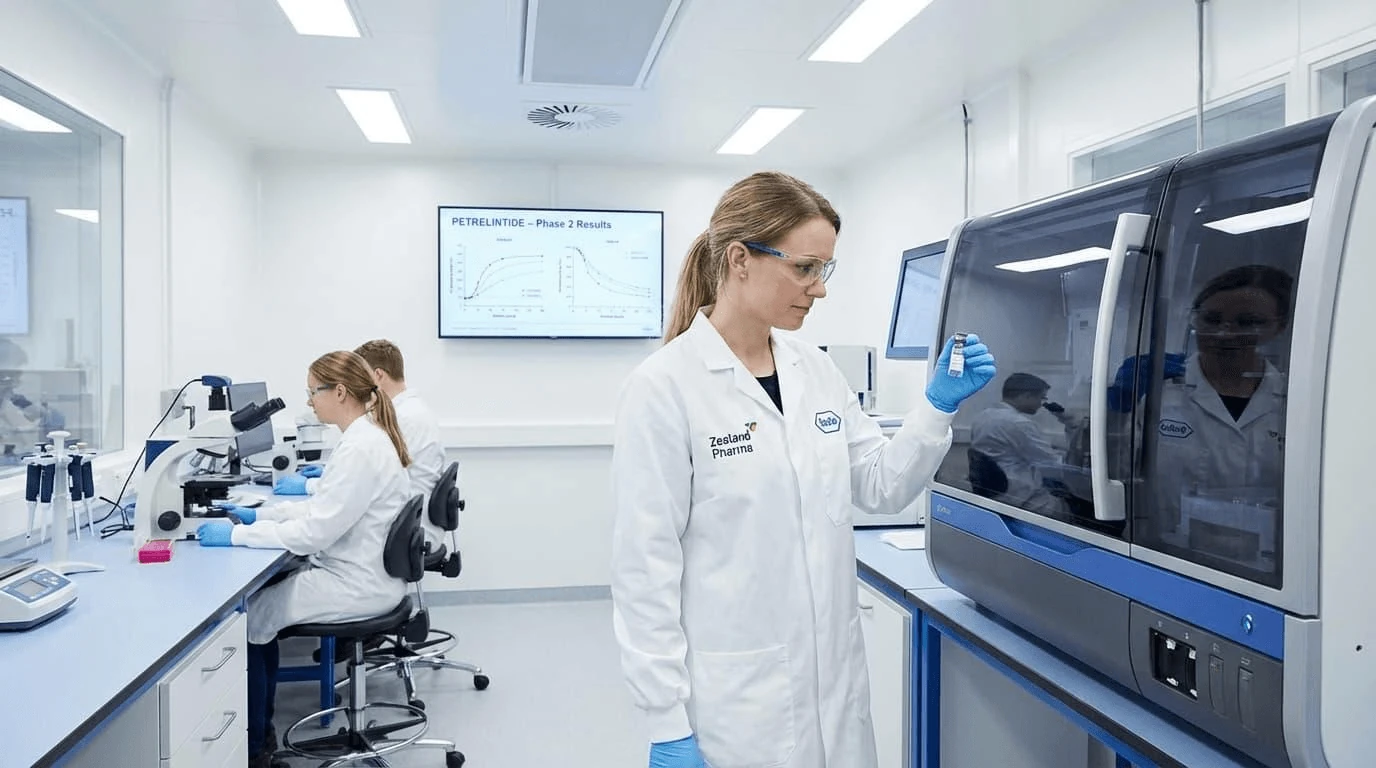
Earlier ZUPREME-1 study data presentation. This figure relates to a separate trial and should not be interpreted as the results of ZUPREME-2.