

Retatrutide (LY3437943) is an investigational synthetic peptide designed to activate three metabolic hormone receptors: the glucose-dependent insulinotropic polypeptide (GIP) receptor, the glucagon-like peptide-1 (GLP-1) receptor, and the glucagon receptor. This triple-receptor approach has made retatrutide an important subject in next-generation peptide and metabolic drug research.
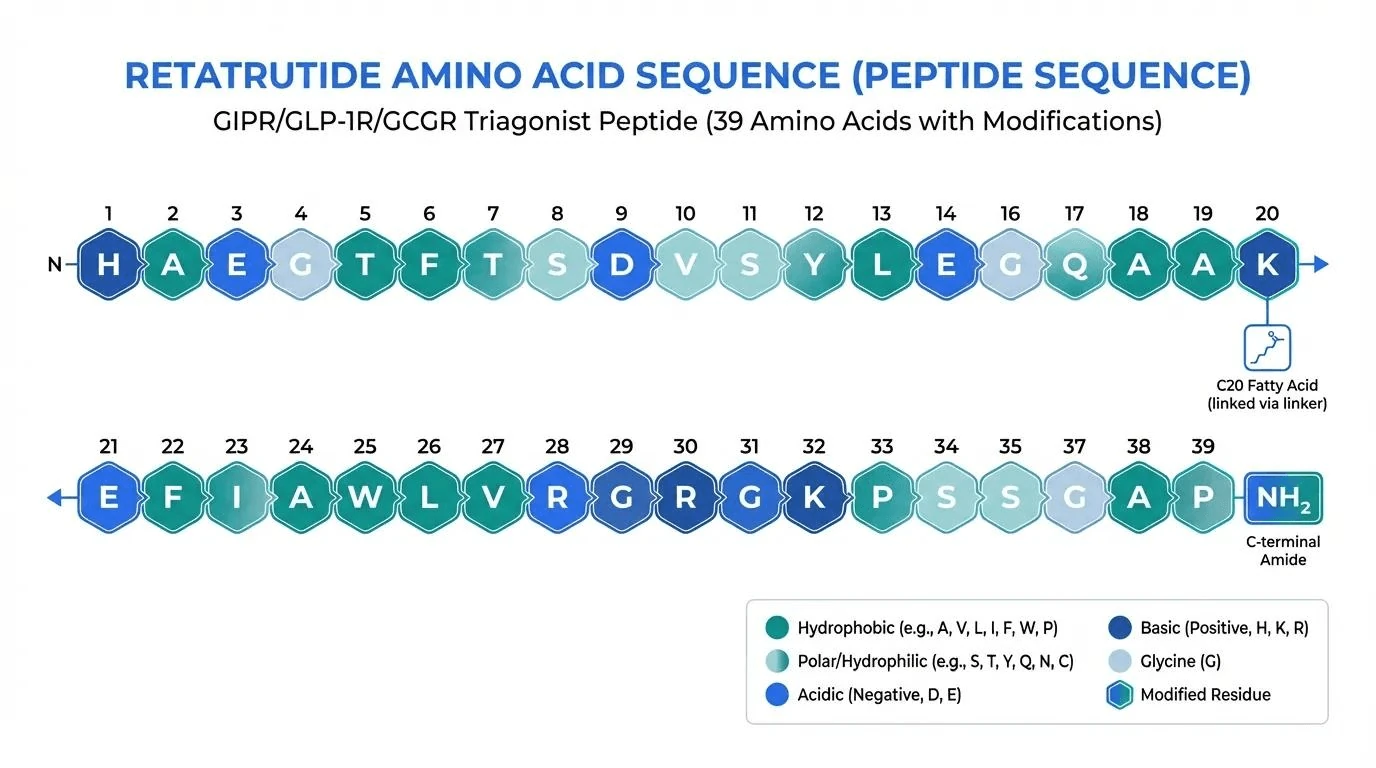
Fig. 1 Chemical structure of retatrutide (LY3437943), a synthetic 39-amino acid peptide engineered for triple GIP/GLP-1/glucagon receptor agonism with a fatty-acid side chain for half-life extension. Image source: PubChem CID 171934787 (Public Domain).
What Is Retatrutide?
Retatrutide, also known as LY3437943, is an investigational peptide developed as a triple agonist of GIP, GLP-1, and glucagon receptors.
Unlike selective GLP-1 receptor agonists such as semaglutide, or dual GIP/GLP-1 receptor agonists such as tirzepatide, retatrutide was designed to simultaneously engage three metabolic signaling pathways.
The three targets are:
- GIP receptor (GIPR)
- GLP-1 receptor (GLP-1R)
- Glucagon receptor (GCGR)
This multi-receptor approach represents an important direction in peptide drug discovery, particularly for metabolic diseases involving glucose regulation, body weight, energy expenditure, and lipid metabolism.
Why Is Retatrutide Different?
The development of incretin-based therapies has progressed from selective receptor agonists toward molecules capable of activating multiple metabolic receptors.
A simplified development concept is:
GLP-1 receptor agonist ↓ Semaglutide
GIP + GLP-1 receptor agonist ↓ Tirzepatide
GIP + GLP-1 + Glucagon receptor agonist ↓ Retatrutide This does not mean that the molecules are simply sequential versions of the same drug. Each peptide has a distinct molecular structure, receptor activity profile, pharmacology, and clinical development program.
Retatrutide is particularly interesting because it combines incretin signaling with glucagon receptor activation. Glucagon receptor agonism is not a trivial addition—it increases energy expenditure and lipid oxidation, but also raises blood glucose, so the relative potency at each receptor must be carefully balanced.
How Does Retatrutide Work?
The pharmacological concept behind retatrutide involves three complementary receptor systems.
1. GLP-1 Receptor Activation
GLP-1 receptor signaling is associated with:
- Glucose-dependent insulin secretion
- Regulation of glucagon secretion
- Delayed gastric emptying
- Appetite regulation
- Changes in food intake
GLP-1 receptor activity is also a major mechanism underlying several established incretin-based therapies.
2. GIP Receptor Activation
GIP is an endogenous incretin hormone involved in glucose-dependent insulin secretion and metabolic regulation.
GIP signaling has also attracted considerable research interest because of its interaction with GLP-1 signaling and its potential role in adipose and energy metabolism. Preclinical data suggest that GIP receptor activation may improve the tolerability of GLP-1-based therapies and contribute to their weight-loss effects.
3. Glucagon Receptor Activation
Glucagon signaling differs from GLP-1 and GIP signaling.
Activation of the glucagon receptor can influence:
- Hepatic glucose metabolism
- Lipid metabolism
- Energy expenditure
- Substrate utilization
The inclusion of glucagon receptor activity is one of the defining features of retatrutide. In preclinical models, glucagon receptor agonism has been shown to increase energy expenditure and reduce adiposity, but it can also raise blood glucose. The design challenge is to balance this effect against the glucose-lowering actions of GIP and GLP-1.
The overall research hypothesis is that carefully balanced activation of all three pathways may influence multiple components of metabolic regulation simultaneously.
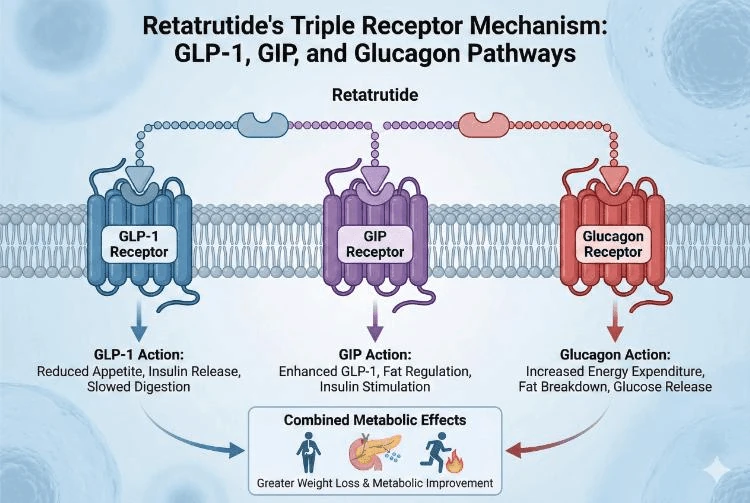
Fig. 2 Conceptual illustration of triple hormone receptor signaling. Retatrutide engages GIPR, GLP-1R, and GCGR simultaneously, combining incretin effects with glucagon-mediated energy expenditure.
The Triple-Agonist Concept
Retatrutide belongs to a broader class of multi-receptor peptide agonists.
The concept is based on combining several biological pathways into one engineered molecule.
A simplified model is:
| Receptor | Major biological role |
|---|---|
| GLP-1R | Glucose regulation, appetite and gastrointestinal signaling |
| GIPR | Incretin signaling and metabolic regulation |
| GCGR | Glucose and energy metabolism |
The challenge in developing a triple agonist is not simply activating all three receptors.
Researchers must consider:
- Relative receptor potency
- Receptor selectivity
- Signaling balance
- Pharmacokinetics
- Dose-response relationships
- Safety and tolerability
The balance between these pathways is therefore an important part of retatrutide research.
Retatrutide Molecular Structure
Retatrutide is a synthetic peptide with structural characteristics designed for prolonged pharmacological activity. It is a 39-amino acid peptide with a molecular formula of C221H342N46O68 and a molecular weight of approximately 4731.3 Da.
Like tirzepatide and semaglutide, retatrutide incorporates a fatty-acid side chain that promotes binding to serum albumin, reduces renal clearance, and supports once-weekly dosing. The peptide sequence is based on a GIP scaffold but includes substitutions that confer GLP-1 and glucagon receptor activity.
Public chemical databases provide structural information and identifiers for retatrutide and related salt forms. PubChem currently lists retatrutide under the synonym LY3437943 and identifies it as an investigational triple receptor agonist.
The molecular design of long-acting peptide therapeutics often incorporates structural modifications intended to alter:
- Proteolytic stability
- Plasma protein interactions
- Circulating exposure
- Receptor activity
- Elimination rate
For peptide researchers, retatrutide is therefore an interesting example of how molecular engineering can be combined with multi-target pharmacology.
Retatrutide and Obesity Research
Obesity has been one of the major areas of clinical research for retatrutide.
In a Phase 2 randomized clinical trial published in the _New England Journal of Medicine_, researchers evaluated retatrutide in adults with obesity who did not have diabetes.
The study investigated multiple dose groups (1 mg, 4 mg, 8 mg, and 12 mg) over 48 weeks and examined changes in body weight as well as safety and tolerability.
The study reported substantial dose-dependent weight reductions, with the highest dose producing mean weight loss of approximately 24% at 48 weeks. Gastrointestinal adverse events such as nausea, diarrhea, vomiting, and constipation were among the commonly reported adverse events, consistent with the broader incretin therapeutic class.
These results generated considerable interest in triple-receptor agonists as a potential next generation of metabolic therapies.
Importantly, Phase 2 results should be distinguished from established clinical indications. Retatrutide remains an investigational drug, and clinical development is continuing.
Retatrutide and Type 2 Diabetes Research
Retatrutide has also been investigated in people with type 2 diabetes.
A Phase 2 randomized controlled trial published in _The Lancet_ evaluated different retatrutide dose regimens in adults with type 2 diabetes.
At 36 weeks, the study reported dose-dependent reductions in body weight and improvements in HbA1c across several retatrutide treatment groups, with the highest dose producing HbA1c reductions comparable to or greater than those seen with established GLP-1 receptor agonists. Gastrointestinal adverse events were among the commonly reported adverse events.
These findings provided clinical data supporting continued investigation of the triple-agonist approach.
Pharmacokinetic Considerations
Long-acting peptide therapeutics require careful optimization of their pharmacokinetic characteristics.
For retatrutide, researchers have investigated dose exposure, duration of action, receptor activity, and dose-escalation strategies as part of clinical development. The terminal half-life is approximately 6 days, supporting once-weekly administration.
The pharmacokinetic design of a multi-receptor peptide is particularly important because receptor activation needs to remain within a therapeutically appropriate range over the dosing interval. If one receptor is over-stimulated relative to the others, the balance of efficacy and tolerability can shift.
From a peptide engineering perspective, this creates several development objectives:
- Maintain sufficient systemic exposure
- Preserve receptor activity
- Control peptide degradation
- Optimize dosing intervals
- Maintain an appropriate receptor-activity balance
Retatrutide vs. Semaglutide vs. Tirzepatide
Retatrutide is often discussed alongside semaglutide and tirzepatide because all three belong to the broader field of incretin-based metabolic therapeutics.
However, their receptor profiles are different.
| Peptide | GLP-1R | GIPR | Glucagon receptor | Half-life |
|---|---|---|---|---|
| Semaglutide | ✓ | — | — | ~1 week |
| Tirzepatide | ✓ | ✓ | — | ~5 days |
| Retatrutide | ✓ | ✓ | ✓ | ~6 days |
This comparison illustrates the progression from single-receptor agonism toward multi-receptor agonism.
However, receptor count alone does not determine clinical performance. Molecular structure, receptor potency, signaling behavior, pharmacokinetics, dose, study population, and safety characteristics all influence the pharmacological profile of an individual peptide.
Retatrutide and Next-Generation Peptide Research
Retatrutide has become an important example of a broader trend toward multi-target peptide therapeutics.
Researchers are investigating whether simultaneous activation of several metabolic pathways can provide a more integrated approach to metabolic disease biology.
This has led to research into:
- Dual GIP/GLP-1 agonists
- GLP-1/glucagon co-agonists
- GIP/glucagon co-agonists
- GIP/GLP-1/glucagon triple agonists
- Other multi-receptor peptide platforms
A 2025 review described triple agonists targeting GLP-1, GIP, and glucagon receptors as an emerging area of obesity and metabolic-disease research, with retatrutide currently representing the most advanced clinical example in this class.
Current Research Directions
Multi-Receptor Pharmacology
One major research question is how the relative activity at GLP-1R, GIPR, and GCGR contributes to the overall pharmacological profile.
Understanding this relationship may help researchers design future multi-receptor peptides with different activity profiles.
Metabolic Disease
Retatrutide is being investigated in obesity and type 2 diabetes, with ongoing Phase 3 clinical programs (TRIUMPH) examining efficacy, safety, and other metabolic outcomes.
Liver and Metabolic Health
Because glucagon signaling can influence hepatic and lipid metabolism, researchers are also interested in how triple agonism may affect metabolic processes beyond body weight and blood glucose. Early-phase studies have explored effects on hepatic steatosis and lipid markers.
Retatrutide Research Materials
For organizations conducting peptide characterization, analytical research, formulation studies, or other laboratory projects, retatrutide can serve as a representative example of a next-generation triple receptor agonist.
Research materials should be evaluated according to:
- Identity
- Purity
- Analytical documentation
- Batch information
- Storage requirements
- Intended research application
Because retatrutide remains an investigational compound, research material should be clearly distinguished from an approved therapeutic product.
Conclusion
Retatrutide represents an important development in the evolution of multi-receptor peptide therapeutics.
Its defining feature is simultaneous agonism of the GIP, GLP-1, and glucagon receptors, creating a pharmacological approach that combines incretin signaling with glucagon-mediated metabolic pathways.
Clinical Phase 2 studies have provided evidence of substantial effects on body weight and glycemic measures in studied populations, while also identifying gastrointestinal adverse events as an important aspect of its safety profile.
For peptide researchers, retatrutide is particularly relevant as a case study in:
- Triple-receptor agonism
- Incretin biology
- Glucagon signaling
- Multi-target peptide design
- Long-acting peptide engineering
- Next-generation metabolic therapeutics
As clinical development continues, further studies will help clarify the long-term efficacy, safety, and potential applications of this emerging peptide platform.
References
- Jastreboff AM, et al. Triple-Hormone-Receptor Agonist Retatrutide for Obesity — A Phase 2 Trial. _New England Journal of Medicine_. 2023;389:514–526. https://pubmed.ncbi.nlm.nih.gov/37366315/
- Rosenstock J, et al. Retatrutide, a GIP, GLP-1 and glucagon receptor agonist, for people with type 2 diabetes: a randomized, double-blind, placebo and active-controlled, parallel-group, phase 2 trial. _The Lancet_. 2023;402:529–544. https://pubmed.ncbi.nlm.nih.gov/37385280/
- Triple Agonism Based Therapies for Obesity. 2025 review of GLP-1/GIP/glucagon triple agonists and retatrutide. https://pubmed.ncbi.nlm.nih.gov/40741227/
- Efficacy and safety of retatrutide, a novel GLP-1, GIP, and glucagon receptor agonist for obesity treatment: a systematic review and meta-analysis. 2025. https://pubmed.ncbi.nlm.nih.gov/40291085/
- PubChem. Retatrutide. Chemical information and identifiers for LY3437943. https://pubchem.ncbi.nlm.nih.gov/compound/Retatrutide
Disclaimer: This article is provided for scientific and educational purposes only. Retatrutide is an investigational compound and should not be presented as an approved treatment. This article does not provide medical advice or recommendations for dosing, self-administration, purchase, or treatment.