

Semaglutide is a long-acting glucagon-like peptide-1 receptor agonist (GLP-1 RA) that has become an important therapeutic peptide in the management of type 2 diabetes and obesity. Its development has attracted significant attention because of its effects on glucose regulation, appetite control, body weight, and cardiometabolic health.
Unlike native GLP-1, which is rapidly degraded in the body, semaglutide has been structurally modified to provide a substantially longer duration of action. This pharmacological profile supports once-weekly subcutaneous administration and has contributed to its widespread clinical development and use.
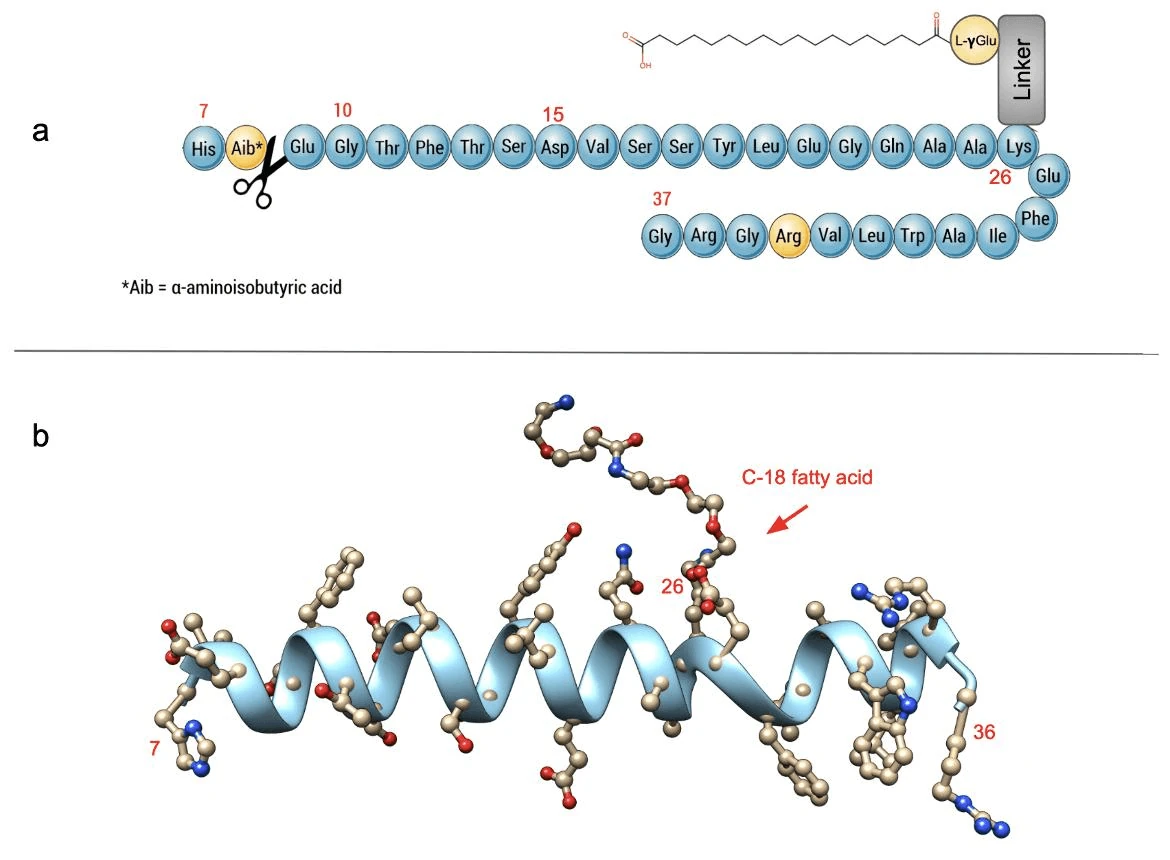
Fig. 1 Chemical structure of semaglutide (C187H291N45O59, MW 4113.6 Da), a 31-amino acid peptide with a C-18 fatty acid moiety attached to Lys26 via a spacer. Image source: Wikimedia Commons / PDB101 (CC BY 4.0).[citation:1][citation:5]
What Is Semaglutide?
Semaglutide is a synthetic peptide analogue of human GLP-1. It belongs to the GLP-1 receptor agonist class and is structurally related to naturally occurring GLP-1[citation:1].
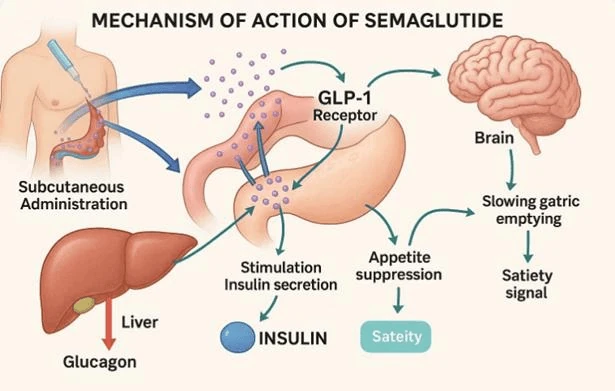
The GLP-1 receptor is involved in several important metabolic processes. Activation of this receptor can enhance glucose-dependent insulin secretion, reduce inappropriate glucagon secretion, slow gastric emptying, and influence appetite and food intake[citation:2].
These combined mechanisms make GLP-1 receptor activation relevant to both blood glucose management and body-weight regulation.
Semaglutide has been developed in both injectable and oral formulations. Oral semaglutide uses a specialized formulation containing an absorption-enhancing excipient to facilitate gastrointestinal uptake of the peptide.
How Does Semaglutide Work?
The primary pharmacological target of semaglutide is the GLP-1 receptor.
After binding to the receptor, semaglutide can influence several physiological pathways:
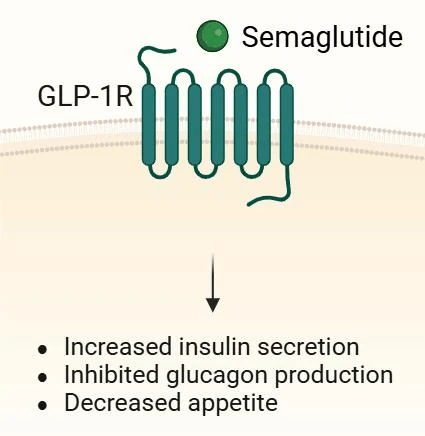
Fig. 2 Simplified GLP-1 receptor signaling pathway. Upon semaglutide binding, the receptor activates Gs protein, leading to increased cAMP levels and downstream effects on insulin secretion and appetite regulation. Image source: Wikimedia Commons (CC BY 4.0).[citation:2]
1. Glucose-dependent insulin secretion
Semaglutide enhances insulin secretion when blood glucose levels are elevated. Because this effect is glucose-dependent, GLP-1 receptor agonists generally have a lower intrinsic risk of hypoglycemia than therapies that stimulate insulin secretion independently of glucose concentration.
2. Suppression of glucagon
Semaglutide can reduce glucagon secretion under conditions of elevated blood glucose. Reduced glucagon signaling can contribute to improved regulation of hepatic glucose production.
3. Delayed gastric emptying
GLP-1 receptor activation can slow gastric emptying. This may influence the rate at which nutrients enter the circulation and can contribute to changes in post-meal glucose levels[citation:10].
Delayed gastric emptying may also affect the absorption of some orally administered medications, which is an important consideration in clinical use.
4. Appetite and energy intake
Semaglutide also acts on pathways involved in appetite regulation. Recent research has identified that semaglutide’s weight-loss effects are mediated through cAMP-dependent mechanisms in GLP-1R-expressing hindbrain neurons, specifically in the area postrema, a brain region containing circuits related to appetite[citation:6].
Clinical research indicates that treatment can reduce hunger and overall energy intake, contributing to weight reduction. This effect is one of the major reasons semaglutide has become an important subject of obesity research.
Semaglutide and Type 2 Diabetes
One of the primary clinical applications of semaglutide is the management of type 2 diabetes.
Clinical development programs have investigated semaglutide both as monotherapy and in combination with other glucose-lowering therapies. Studies have reported improvements in glycated hemoglobin (HbA1c) and reductions in body weight compared with several comparator treatments.
The SUSTAIN clinical development program played an important role in evaluating once-weekly injectable semaglutide in people with type 2 diabetes. Oral semaglutide was subsequently studied through the PIONEER clinical development program.
The availability of an oral formulation has also expanded research into oral peptide delivery, an area that has historically been challenging because peptides can be degraded in the gastrointestinal tract and generally have poor oral bioavailability.
Semaglutide and Weight Management
Semaglutide has also become an important research subject in obesity medicine.
The mechanism is different from conventional appetite-suppressing approaches because GLP-1 receptor activation influences physiological pathways involved in hunger, satiety, gastric emptying, and energy intake.
Clinical studies have demonstrated substantial reductions in body weight in people receiving semaglutide, although the magnitude of weight reduction varies depending on dose, formulation, treatment duration, population, and accompanying lifestyle intervention.
Recent reviews continue to examine semaglutide's role in long-term obesity management, including treatment persistence, tolerability, safety monitoring, and its potential applications in populations with different metabolic and cardiovascular characteristics.
Pharmacokinetic Characteristics
One of the most important characteristics of semaglutide is its relatively long half-life.
For subcutaneous semaglutide, the terminal half-life is approximately one week. This extended pharmacokinetic profile allows once-weekly administration and helps maintain relatively stable drug exposure over the dosing interval.
The long duration of action is related to structural modifications that increase resistance to enzymatic degradation and influence the molecule's interaction with plasma proteins. Semaglutide binds with high affinity to plasma albumin, with more than 99% bound to albumin, which promotes high levels of drug stability and extends its circulation time[citation:9].
A systematic review of human pharmacokinetic studies found that semaglutide has a predictable pharmacokinetic profile following both subcutaneous and oral administration, although exposure is influenced by dose and, for oral administration, by factors such as food intake and dosing conditions.
Oral Semaglutide
The development of oral semaglutide represents an important milestone in peptide drug delivery.
Most peptide drugs have traditionally required injection because gastrointestinal enzymes and the gastrointestinal environment can substantially limit peptide absorption.
Oral semaglutide uses a co-formulation with an absorption-enhancing compound known as SNAC (sodium N-(8-[2-hydroxybenzoyl]amino) caprylate). This formulation was developed to improve the stability and absorption of semaglutide following oral administration[citation:4][citation:16].
Research has revealed that absorption of orally delivered semaglutide takes place primarily in the stomach, confined to an area in close proximity to the tablet surface, and requires co-formulation with SNAC. SNAC protects against enzymatic degradation via local buffering actions and only transiently enhances absorption. The mechanism of absorption is transcellular, without evidence of effect on tight junctions[citation:16].
Recent molecular dynamics simulations and experimental evidence suggest that SNAC induces transient membrane defects that become enriched in the enhancer. The polar peptide can then become immersed within these PE-filled defects, which locally lowers the energetic barrier for crossing the hydrophobic membrane core. This has been described as a "quicksand model" of permeation enhancement[citation:12].
The development of oral semaglutide is therefore relevant not only to diabetes treatment but also to the broader field of oral peptide drug delivery.
Safety and Tolerability
Like other GLP-1 receptor agonists, semaglutide can cause gastrointestinal adverse effects.
Commonly reported effects include:
- Nausea
- Vomiting
- Diarrhea
- Constipation
- Abdominal discomfort
These effects are particularly relevant during treatment initiation and dose escalation. Clinical management generally considers individual tolerability and the patient's overall medical situation.
Because semaglutide is a prescription therapeutic peptide, its use should be guided by qualified healthcare professionals. Research findings should not be interpreted as recommendations for self-administration, dosing, or treatment decisions.
Cardiometabolic Research
Research into semaglutide has expanded beyond glucose and body weight.
The SELECT trial (Semaglutide Effects on Cardiovascular Outcomes in People with Overweight or Obesity) was a landmark study that randomized over 17,000 participants with overweight or obesity and established cardiovascular disease but without diabetes. The trial demonstrated that semaglutide 2.4 mg reduced the occurrence of major adverse cardiac events (MACE) compared with placebo over a mean follow-up period of nearly 40 months[citation:3][citation:11].
The SELECT trial showed that patients who received semaglutide had a significant decrease in major heart disease events (heart attacks, strokes, and death) compared to those who got the placebo. Participants on semaglutide also had lower rates of all-cause death, with reductions in both cardiovascular and non-cardiovascular mortality. The lower rate of non-cardiovascular death with semaglutide was predominantly due to fewer infectious deaths[citation:7].
These results represent the first definitive evidence that a weight-loss medication can reduce cardiovascular events, opening new treatment possibilities for patients with cardiovascular disease who have overweight or obesity, even without diabetes[citation:11].
More recent research is also examining how GLP-1 receptor signaling may influence multiple organs and molecular pathways. Emerging systems-medicine studies are investigating changes in proteins, metabolites, inflammatory pathways, and extracellular-matrix signaling associated with semaglutide treatment.
However, emerging or experimental applications should be distinguished from established clinical indications. Not every potential application discussed in scientific literature has been established as a standard treatment.
Why Is Semaglutide Important for Peptide Research?
Semaglutide provides an interesting example of how peptide engineering can transform the pharmacological properties of a naturally occurring peptide.
Native GLP-1 has a very short biological half-life. Through molecular modification, researchers developed an analogue with substantially longer activity while retaining the ability to activate the GLP-1 receptor.
This illustrates several important principles in peptide drug development:
- Improving metabolic stability
- Extending biological half-life
- Modifying protein binding
- Optimizing receptor activity
- Developing alternative administration routes
- Improving patient convenience
The development of oral semaglutide further demonstrates the challenges and opportunities involved in developing orally administered peptide therapeutics.
Future Directions
Research surrounding semaglutide continues to expand.
Current areas of investigation include:
- Long-term metabolic outcomes
Researchers continue to study the long-term effects of GLP-1 receptor activation on metabolic health and chronic disease management.
- Combination therapies
Combination approaches involving GLP-1 pathways and other metabolic targets are an active area of pharmaceutical research.
- Next-generation peptide therapeutics
The success of semaglutide has encouraged the development of new peptide-based therapies designed to achieve greater efficacy, longer duration of action, or improved tolerability.
- Oral peptide delivery
The development of oral semaglutide has demonstrated that peptide administration does not necessarily have to rely exclusively on injection. This has stimulated broader research into technologies for improving oral peptide absorption.
- Precision medicine
Researchers are increasingly investigating whether molecular and clinical characteristics can help predict which patients may respond best to particular metabolic therapies. Recent research has begun incorporating proteomics, metabolomics, and artificial intelligence into the study of semaglutide's biological effects.
Conclusion
Semaglutide represents a significant development in modern peptide therapeutics.
As a long-acting GLP-1 receptor agonist, it combines effects on glucose regulation, appetite, energy intake, and body weight. Its pharmacokinetic characteristics support once-weekly injectable administration, while the development of oral semaglutide demonstrates the potential of advanced formulation technologies for peptide delivery.
Beyond its established clinical applications, semaglutide has also become an important research platform for understanding GLP-1 biology, peptide engineering, metabolic disease, and next-generation therapeutic development.
For the broader peptide industry, the development of semaglutide demonstrates how rational molecular modification and drug-delivery technologies can turn a short-acting endogenous peptide into a clinically useful long-acting therapeutic molecule.
References
- CHEBI:167574 - semaglutide. EMBL-EBI. https://www.ebi.ac.uk/chebi/CHEBI:167574[citation:1]
- Structural pharmacology and mechanisms of GLP-1R signaling. ScienceDirect, 2025.[citation:2]
- Efficacy and Safety of Semaglutide According to Frailty Status in the SELECT Trial. Circulation, 2025.[citation:3]
- Permeation enhancer-induced membrane defects assist the oral absorption of peptide drugs. Nature Communications, 2025.[citation:4]
- PDB101: Semaglutide. RCSB PDB.[citation:5]
- NIH researchers identify avenue for enhanced GLP-1-induced weight loss. NIH, 2026.[citation:6]
- Scirica BM, et al. Effects of semaglutide on all-cause and cardiovascular mortality in the SELECT trial. Journal of the American College of Cardiology, 2024.[citation:7]
- Semaglutide (Wegovy) Pharmacoeconomic Review. Canadian Agency for Drugs and Technologies in Health, 2025.[citation:19]
- Semaglutide Product Information. PeptideDB.[citation:9]
- WEGOVY Prescribing Information. DailyMed, FDA.[citation:10]
- Study Shows Weight Loss Drug Decreases Heart Disease Risk. Mass General Brigham, 2026.[citation:11]
- Salcaprozate Sodium as a Permeation Enhancer—Mechanism, Applications and Unresolved Questions. MDPI Pharmaceutics, 2026.[citation:12]
- Bucklett ST, et al. Transcellular stomach absorption of a derivatized glucagon-like peptide-1 receptor agonist. Science Translational Medicine, 2018.[citation:16]