

Tirzepatide is a synthetic peptide-based dual agonist of the glucose-dependent insulinotropic polypeptide (GIP) receptor and the glucagon-like peptide-1 (GLP-1) receptor. Its ability to simultaneously target two incretin pathways has made it an important subject in metabolic disease and peptide drug research.
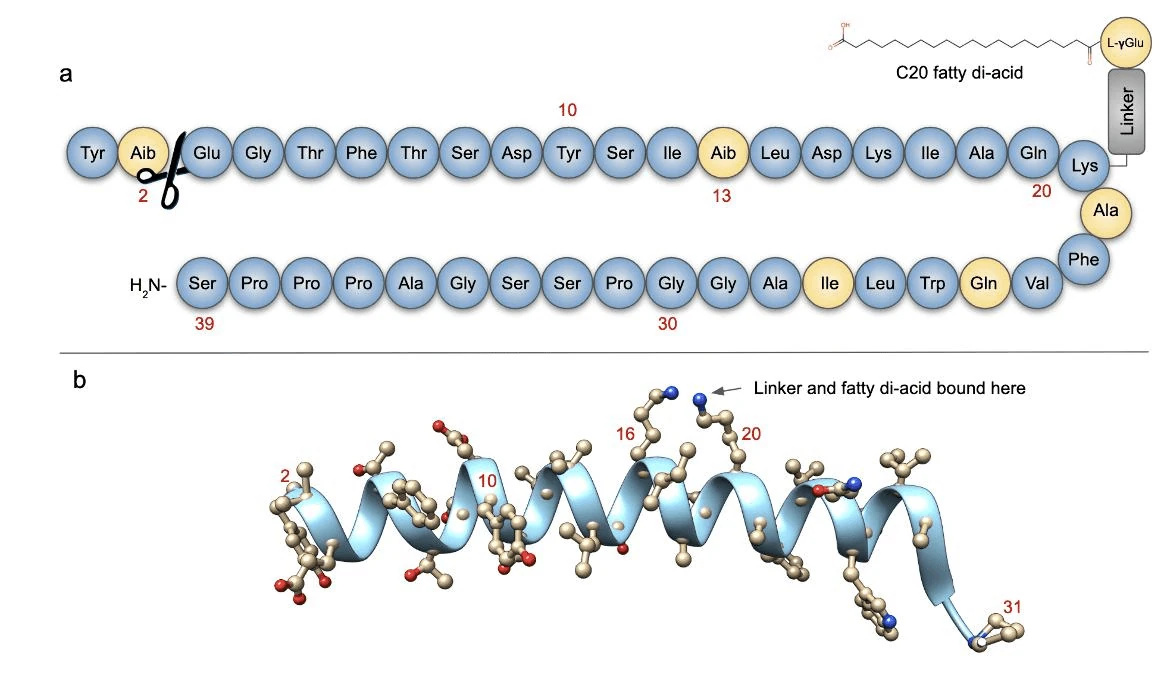
Fig. 1 Chemical structure of tirzepatide (C225H348N48O68), a 39-amino acid synthetic peptide with a C20 fatty diacid moiety attached via a linker to Lys20. Image source: PubChem CID 156588324 (Public Domain).
What Is Tirzepatide?
Tirzepatide is a synthetic linear peptide designed to activate both the GIP receptor (GIPR) and the GLP-1 receptor (GLP-1R).
This distinguishes tirzepatide from selective GLP-1 receptor agonists such as semaglutide. Rather than acting primarily through a single incretin receptor, tirzepatide combines activity at two receptor systems involved in glucose regulation, insulin secretion, appetite, and energy metabolism.
Tirzepatide is also structurally engineered to have a prolonged duration of action. Its molecular design includes a fatty-acid-containing modification that promotes albumin binding and contributes to its long pharmacokinetic profile.
From a peptide drug-development perspective, tirzepatide is an example of how receptor polypharmacology, peptide engineering, and molecular half-life extension can be combined within a single therapeutic peptide.
Tirzepatide Molecular Structure
Tirzepatide has the molecular formula C225H348N48O68 and a molecular weight of approximately 4813.5 Da. It is a relatively large synthetic peptide composed of 39 amino acids, based on the native GIP sequence but modified to confer GLP-1 receptor activity and metabolic stability.
One important feature of tirzepatide is its lipid-containing side-chain modification. A C20 fatty diacid moiety is attached via a hydrophilic linker to the lysine residue at position 20. This modification is not simply a structural variation—it is part of the molecule’s pharmacological design and contributes to binding with albumin in circulation, which helps reduce rapid elimination and supports prolonged exposure.
This approach illustrates a common strategy in modern peptide engineering:
- Modifying peptide structure
- Increasing resistance to rapid elimination
- Enhancing plasma protein binding
- Extending biological activity
- Supporting less frequent administration
For researchers studying peptide engineering, tirzepatide provides an interesting example of how structural modification can influence both pharmacology and pharmacokinetics.
How Does Tirzepatide Work?
Tirzepatide simultaneously interacts with two incretin receptors:
GIP receptor + GLP-1 receptor
Both pathways are involved in metabolic regulation, but they are not identical. The dual agonism produces effects that are not simply additive, because the two receptor systems interact at multiple levels—including shared downstream signaling, receptor trafficking, and tissue-specific expression.
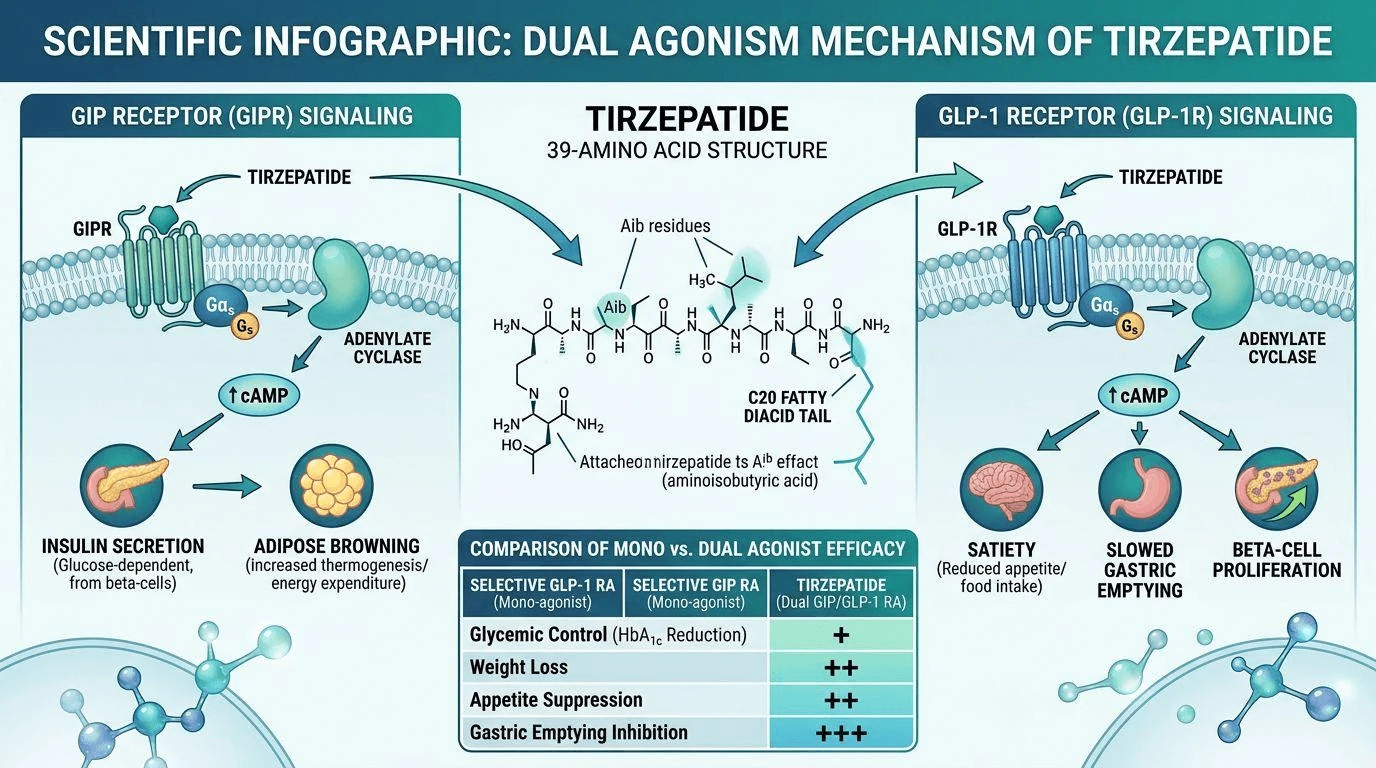
*Fig. 2 Simplified dual incretin receptor signaling. Tirzepatide activates both GIPR and GLP-1R, leading to complementary effects on insulin secretion, glucagon suppression, gastric emptying, and appetite regulation.
GLP-1 Receptor Pathway
GLP-1 receptor activation can:
- Increase glucose-dependent insulin secretion
- Suppress glucagon secretion under hyperglycemic conditions
- Slow gastric emptying
- Influence appetite and food intake
- Contribute to improved glucose regulation
GIP Receptor Pathway
GIP is another endogenous incretin hormone involved in glucose-dependent insulin secretion and metabolic regulation. GIP signaling also interacts with adipose tissue and energy metabolism. The physiological relationship between GIP signaling and GLP-1 signaling is an active area of research.
Tirzepatide therefore provides researchers with a useful model for studying the pharmacological effects of dual incretin receptor activation.
Dual GIP/GLP-1 Receptor Activation
The defining characteristic of tirzepatide is its dual receptor activity.
Traditional GLP-1 receptor agonists primarily target GLP-1R. Tirzepatide, by contrast, was designed to engage both GIPR and GLP-1R.
Research suggests that the pharmacology of tirzepatide is more complex than simply adding the effects of two independent agonists. Studies have investigated receptor occupancy, signaling bias, receptor trafficking, and differences in the relative activity of tirzepatide at GIPR and GLP-1R.
Recent molecular-dynamics research has also examined how tirzepatide interacts with GLP-1R and GIPR at the molecular level, providing additional insight into peptide-receptor recognition and receptor activation.
This makes tirzepatide particularly relevant to research into multi-target peptide therapeutics.
Tirzepatide and Type 2 Diabetes
Tirzepatide was initially developed primarily for metabolic disease and type 2 diabetes.
The SURPASS clinical development program investigated tirzepatide at several dose levels (5, 10, and 15 mg) and compared its effects with placebo and other glucose-lowering therapies, including semaglutide. Across the SURPASS trials, tirzepatide demonstrated substantial reductions in HbA1c and body weight, with the highest dose often producing greater effects than comparator GLP-1 receptor agonists.
Clinical studies have reported improvements in glycemic control and body weight in people with type 2 diabetes. The research program also helped establish the pharmacological profile and tolerability of once-weekly tirzepatide administration.
The development of tirzepatide illustrates the increasing interest in multi-receptor approaches to metabolic disease.
Tirzepatide and Weight Management
Tirzepatide has also become an important research subject in obesity and weight-management studies.
Because both GIP and GLP-1 pathways are involved in metabolic regulation, researchers have investigated whether dual receptor activation can produce substantial changes in body weight and metabolic parameters. The SURMOUNT clinical program evaluated tirzepatide specifically in people with obesity or overweight, with or without type 2 diabetes.
A meta-analysis of randomized controlled trials found dose-dependent reductions in body weight with tirzepatide compared with placebo across the evaluated studies. However, clinical outcomes vary by study population, treatment duration, dose, and other study characteristics.
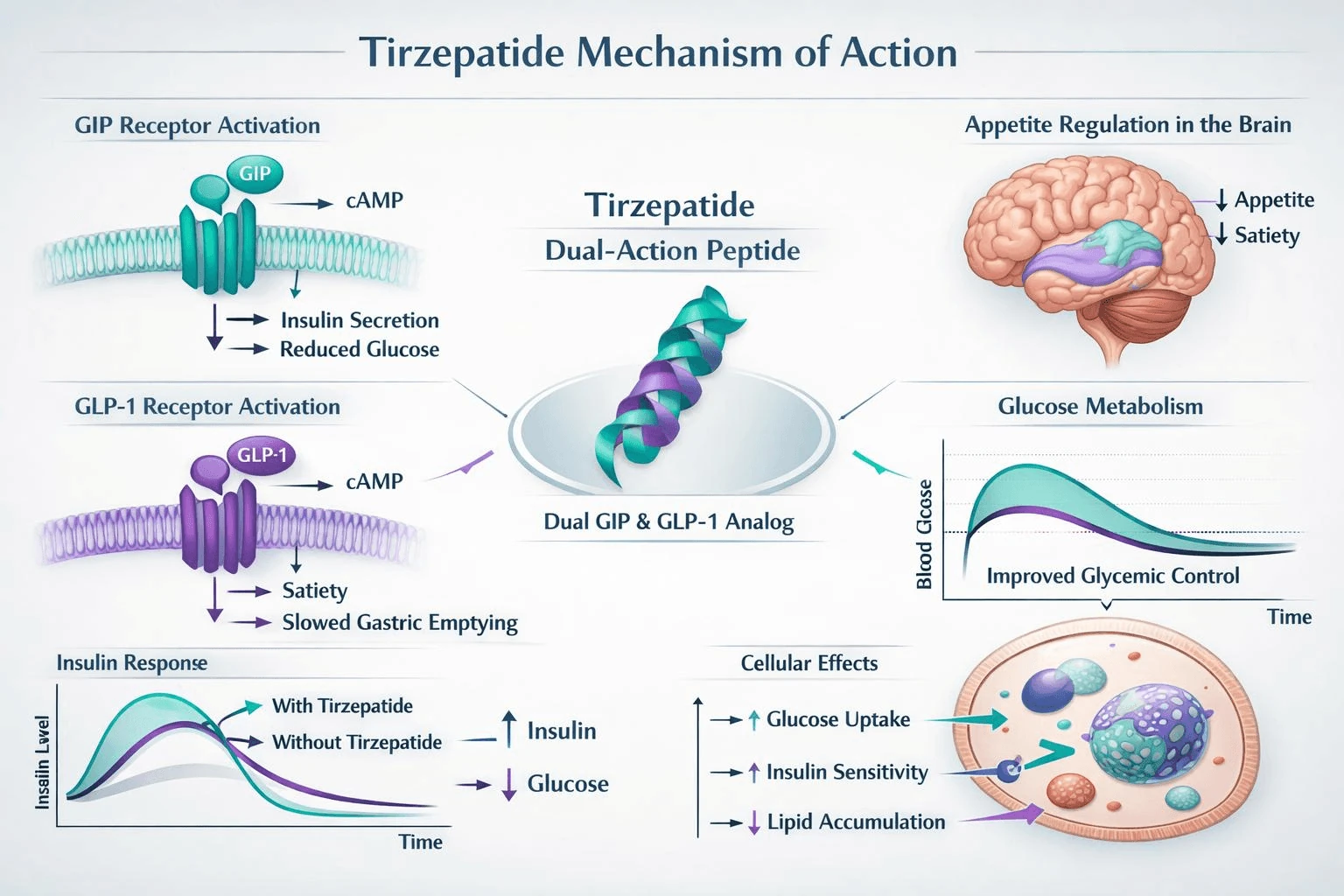
*Fig. 3 Metabolic research and pharmaceutical development. Tirzepatide has become a key model compound for studying dual incretin receptor pharmacology and long-acting peptide engineering.
Pharmacokinetic Characteristics
Tirzepatide was engineered for prolonged activity.
Its molecular structure includes a fatty-acid-based modification that promotes albumin binding. This reduces the rate at which the peptide is cleared from circulation and contributes to its extended pharmacokinetic profile.
The resulting pharmacokinetic properties support once-weekly administration in approved therapeutic formulations. The terminal half-life of tirzepatide is approximately 5 days, allowing steady-state exposure with weekly dosing.
From a peptide-development perspective, this is particularly important because naturally occurring incretin peptides generally have much shorter half-lives—native GLP-1 is degraded within minutes, and native GIP has a half-life of only a few minutes.
Researchers can therefore view tirzepatide as an example of several peptide-engineering principles working together:
- Receptor-target optimization
- Fatty-acid conjugation
- Albumin binding
- Reduced clearance
- Extended biological activity
Tirzepatide Compared With Selective GLP-1 Agonists
Tirzepatide and selective GLP-1 receptor agonists belong to related but distinct pharmacological approaches.
| Feature | Tirzepatide | Selective GLP-1 receptor agonists |
|---|---|---|
| Primary targets | GIPR + GLP-1R | GLP-1R |
| Receptor strategy | Dual agonism | Selective agonism |
| Peptide engineering | Includes lipid-containing modification | Depends on individual molecule |
| Administration | Long-acting formulations | Varies by molecule |
| Research focus | Dual incretin signaling | GLP-1 signaling |
| Key research areas | Metabolism, diabetes, obesity | Diabetes, obesity, metabolic health |
This distinction is particularly important when discussing peptide drug discovery because it demonstrates two different approaches to incretin-based therapeutic design.
Tirzepatide and Peptide Drug Development
Tirzepatide is particularly interesting from a pharmaceutical research perspective because it combines several advanced design concepts within one molecule.
Multi-Receptor Targeting
Instead of targeting only one receptor, tirzepatide engages two incretin receptor systems. This requires careful balancing of relative activity at each receptor, since over- or under-stimulation of one pathway can shift the overall pharmacological profile.
Half-Life Extension
The lipid-containing modification increases albumin binding and helps extend systemic exposure. This strategy is now widely used across peptide therapeutics, including semaglutide, liraglutide, and insulin degludec.
Peptide Optimization
The peptide sequence and chemical modifications were designed to produce a specific receptor activity profile rather than simply reproduce the properties of a naturally occurring hormone. Tirzepatide is based on the GIP sequence but incorporates multiple substitutions that confer GLP-1 receptor activity and metabolic stability.
Metabolic Disease Applications
The development of tirzepatide demonstrates how peptide-based molecules can be engineered for chronic metabolic disorders, where long-term tolerability, convenience, and adherence are critical.
Current Research Directions
Tirzepatide continues to be studied across several areas of metabolic and pharmaceutical research.
Next-Generation Dual Agonists
The development of tirzepatide has stimulated research into additional GIP/GLP-1 receptor agonists with different receptor activity profiles, including molecules with biased signaling or altered relative potency at the two receptors.
Triple Receptor Agonists
Researchers are also investigating molecules capable of simultaneously targeting GIP, GLP-1, and glucagon receptors. These multi-receptor molecules represent a broader strategy in peptide drug discovery and may provide additional tools for studying metabolic regulation, particularly for weight management and hepatic lipid metabolism.
Molecular Mechanisms
Structural biology, molecular dynamics simulations, and receptor-signaling studies are being used to better understand how tirzepatide interacts with GLP-1R and GIPR. Cryo-EM structures of tirzepatide-bound receptors have provided new insights into the structural basis of dual agonism.
Cardiometabolic Research
Researchers are continuing to evaluate the effects of incretin-based therapies on cardiovascular and other metabolic outcomes. These areas remain active fields of investigation, with large outcome trials ongoing.
Peptide Engineering
The success of long-acting dual receptor agonists has increased interest in peptide modifications that can improve stability, receptor activity, tissue exposure, and dosing convenience.
Tirzepatide Research Materials
For organizations working on peptide characterization, analytical research, formulation development, or related laboratory projects, tirzepatide can be studied as a representative example of a long-acting dual GIP/GLP-1 receptor agonist.
Different research quantities may be relevant depending on project requirements.
Research note: Availability, specifications, analytical documentation, and intended-use requirements should be verified independently for each material and project.
Conclusion
Tirzepatide represents an important development in modern peptide drug research.
Its defining characteristic is dual GIP and GLP-1 receptor agonism, combined with structural modifications that extend its pharmacokinetic profile.
Rather than simply reproducing the activity of a naturally occurring incretin, tirzepatide demonstrates how peptide engineering can combine receptor targeting, lipid modification, albumin binding, and long-acting pharmacology within a single molecule.
For peptide researchers and pharmaceutical developers, tirzepatide provides an important case study in:
- Dual-receptor peptide design
- Incretin biology
- Long-acting peptide engineering
- Albumin-binding strategies
- Metabolic disease research
- Next-generation multi-target therapeutics
As research continues, tirzepatide and related molecules may provide valuable insights into how multi-receptor peptide therapeutics can be designed and optimized.
References
- Nowak M, Nowak W, Grzeszczak W. Tirzepatide - a dual GIP/GLP-1 receptor agonist - a new antidiabetic drug with potential metabolic activity in the treatment of type 2 diabetes. Endokrynologia Polska, 2022. https://pubmed.ncbi.nlm.nih.gov/35593668/
- Tall Bull S, Nuffer W, Trujillo J. Tirzepatide: A novel, first-in-class, dual GIP/GLP-1 receptor agonist. Journal of Diabetes and its Complications, 2022. https://pubmed.ncbi.nlm.nih.gov/36375235/
- Liu S, et al. Mechanisms of action and therapeutic applications of GLP-1 and dual GIP/GLP-1 receptor agonists. Frontiers in Endocrinology, 2024. https://pubmed.ncbi.nlm.nih.gov/39114288/
- A Comprehensive Review on the Pharmacokinetics and Drug-Drug Interactions of Approved GLP-1 Receptor Agonists and a Dual GLP-1/GIP Receptor Agonist. https://pubmed.ncbi.nlm.nih.gov/40330819/
- PubChem. Tirzepatide, CID 156588324. https://pubchem.ncbi.nlm.nih.gov/compound/tirzepatide
Disclaimer: This article is provided for scientific and educational purposes only. It is not medical advice and does not recommend the use, dosing, purchase, or self-administration of tirzepatide or any other prescription medicine.