Knowledge Base1 min read
Peptide Knowledge Base
An educational peptide knowledge base covering therapeutic peptides, discovery, synthesis, modification, delivery, applications, and quality control.
 By LiyuPepLabs
Research-oriented guides, company news and reference articles to help you source, store and verify research peptides with confidence.
An educational peptide knowledge base covering therapeutic peptides, discovery, synthesis, modification, delivery, applications, and quality control.
By LiyuPepLabsEli Lilly will present new cardiometabolic data at EASD 2026, including pivotal Phase 3 results for retatrutide, the largest and longest study of Foundayo in type 2 diabetes, and Phase 2 data for eloraTZP.
 By Eli Lilly and Company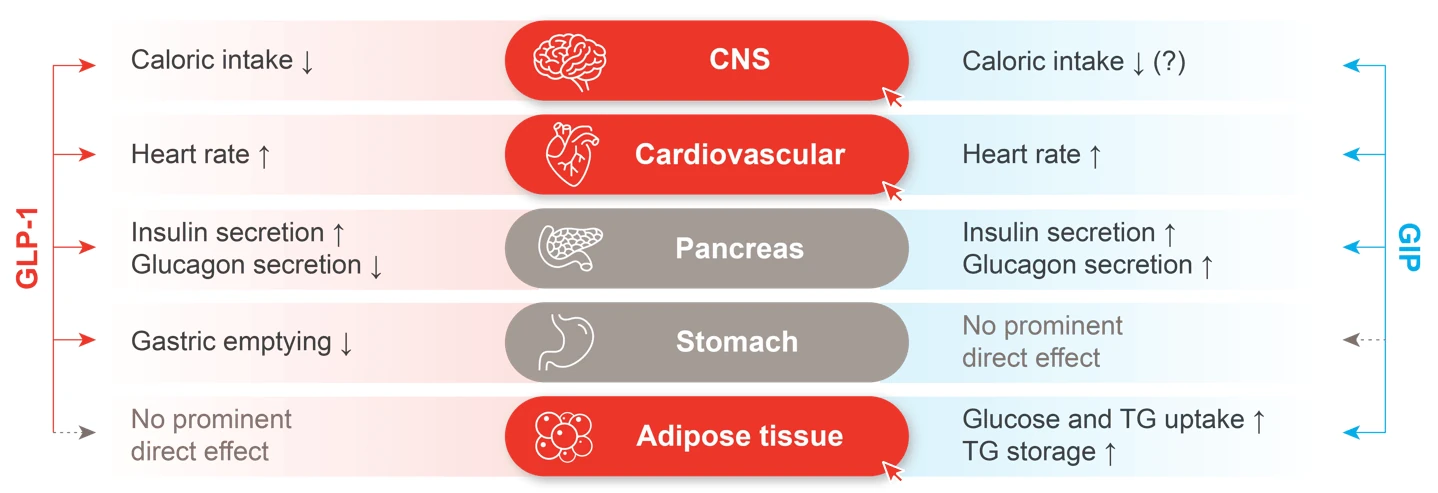
Researchers from the Institute of Oceanology, Chinese Academy of Sciences, have identified a deep-sea mussel-derived decapeptide, KDETRTPEEL, that selectively inhibits coagulation factor XIa (FXIa), showing potent anticoagulant activity and in vivo antithrombotic efficacy.
 By Chinese Academy of Sciences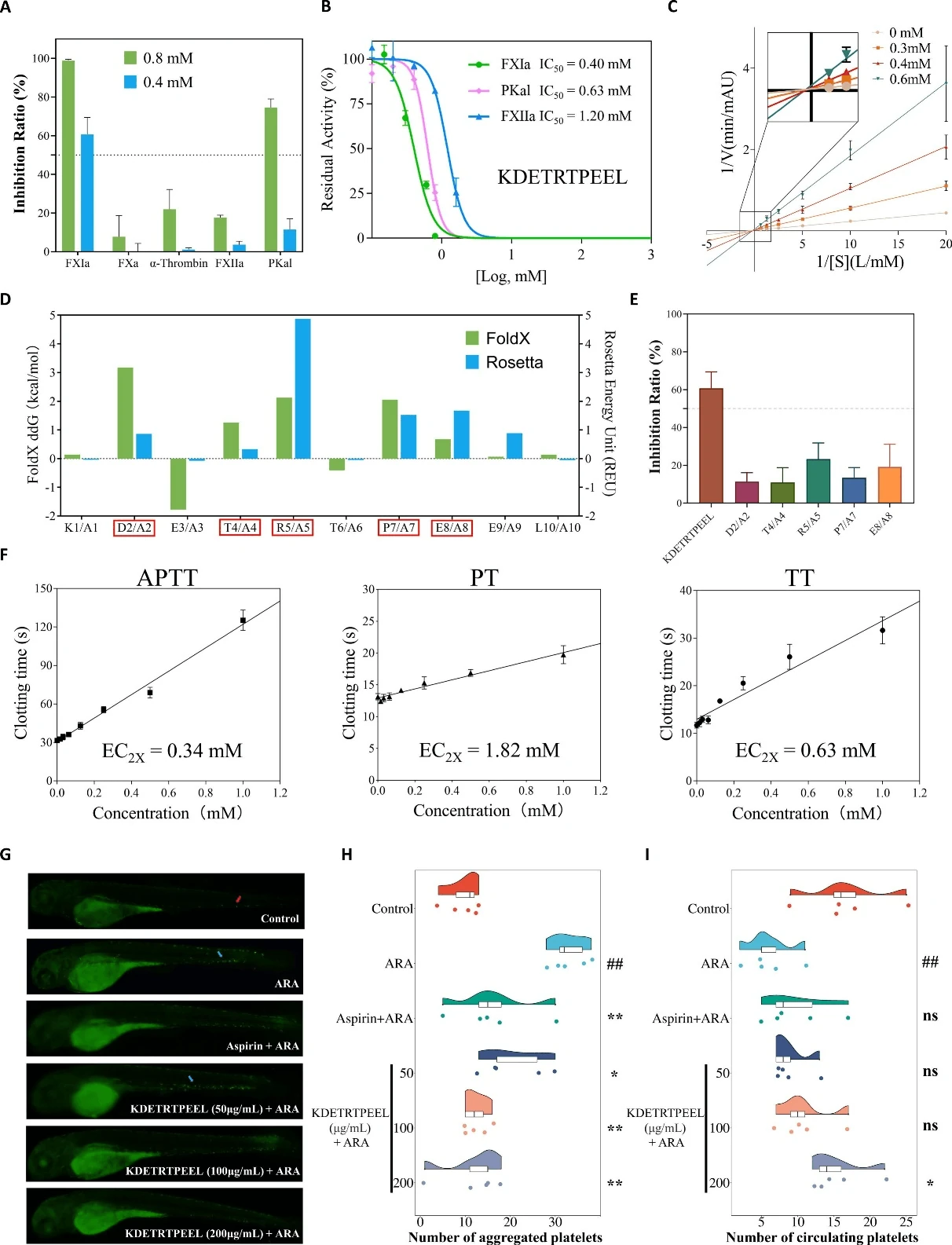
UvA researchers are integrating analytical instruments into an AI-guided autonomous lab to enable rapid, independent optimisation of therapeutic peptides, creating the RoboBioConjugator.
 By University of Amsterdam (UvA)
The FDA published 17 revised draft product-specific guidances (PSGs) for peptide products, covering five key areas: peptide production methods for ANDAs, innate immune response testing, impurity thresholds, higher order structure assessment, and biological activity assessment.
 By FDA
How therapeutic peptides work and why they are reshaping drug development: mechanism of action, key research areas in oncology, metabolic disorders, neurodegeneration and regenerative medicine, plus their advantages, challenges and the role of AI in discovery.
 By Marzia Khan
A practical introduction to therapeutic peptides, including their molecular characteristics, biological targets, development logic, advantages, and key limitations.
 By Lei Wang et al.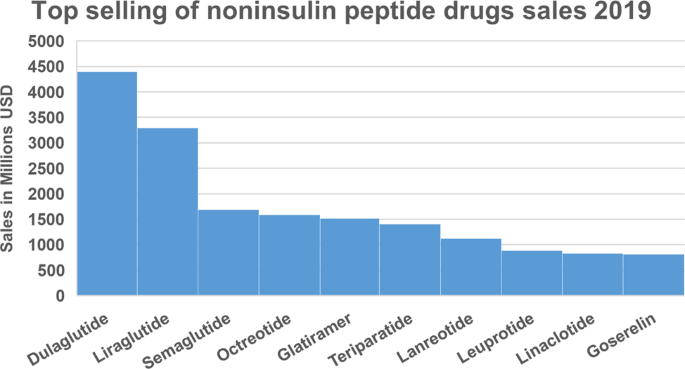
A concise history of peptide medicines, from insulin and natural hormones to peptide analogues, natural-product peptides, and modern discovery technologies.
By Lei Wang et al.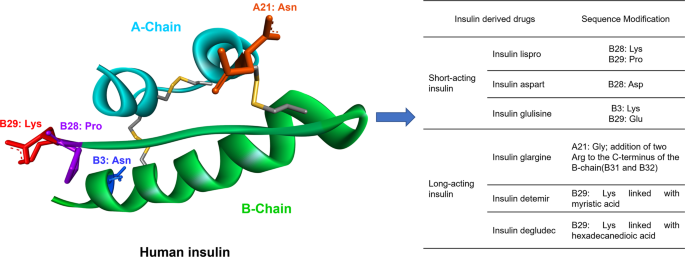
Why peptides are attractive therapeutic molecules, including target recognition, selectivity, structural flexibility, and opportunities for molecular optimization.
By Lei Wang et al.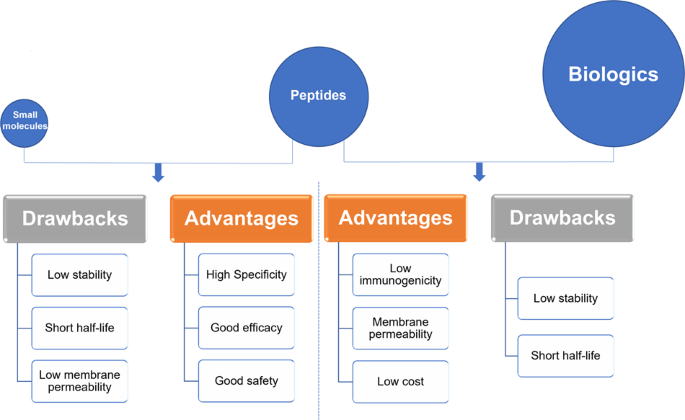
How therapeutic peptides are discovered and optimized, from natural hormones and natural products to biological display, screening libraries, rational design, and computational methods.
By Lei Wang et al.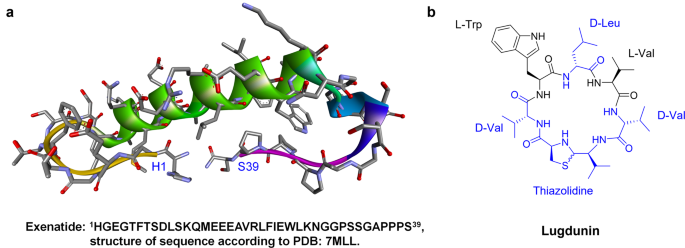
An introduction to peptide production, with emphasis on solid-phase peptide synthesis, coupling, deprotection, purification, analytical characterization, and scale-up considerations.
By Lei Wang et al.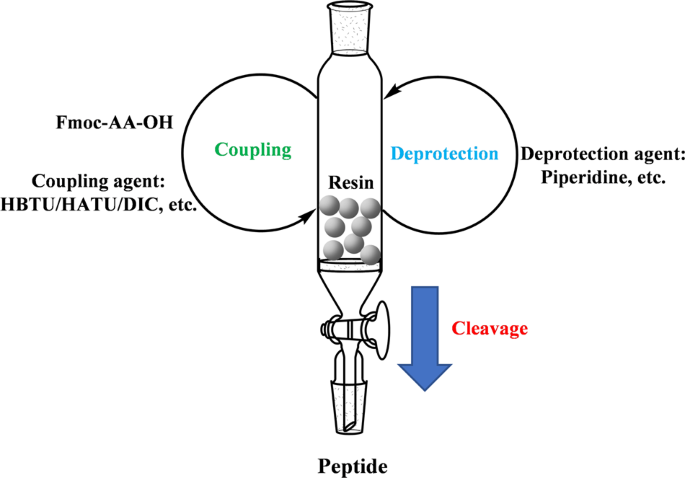
How peptide backbones, side chains, termini, and overall structures can be modified to tune stability, activity, selectivity, and pharmacological properties.
By Lei Wang et al.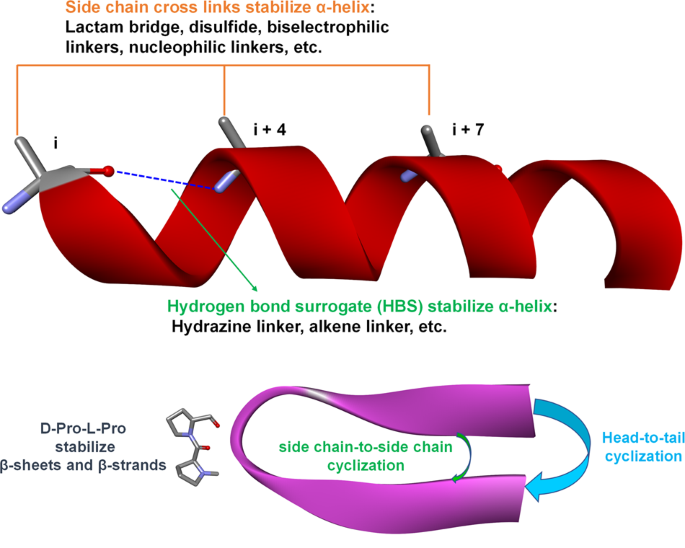
Why peptide delivery can be difficult and how molecular modification, formulation, carriers, and tissue-targeting strategies are used to address stability, absorption, and permeability limitations.
By Lei Wang et al.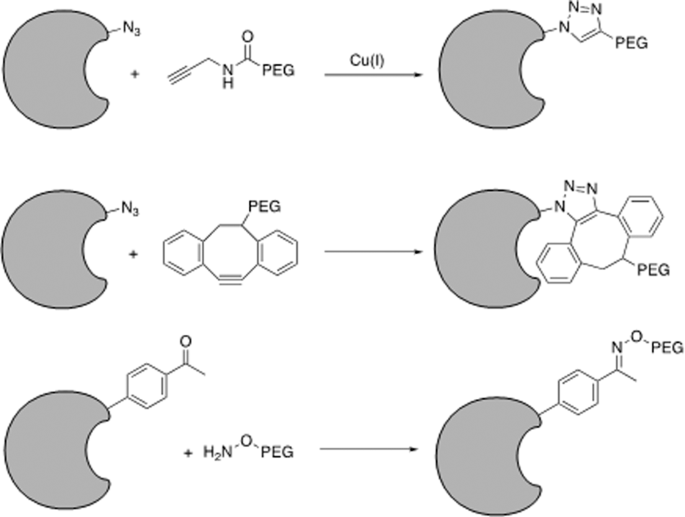
Where therapeutic peptides have been investigated or used, including metabolic and endocrine disease, cardiovascular research, oncology, pain, neurological disease, and anti-infective applications.
By Lei Wang et al.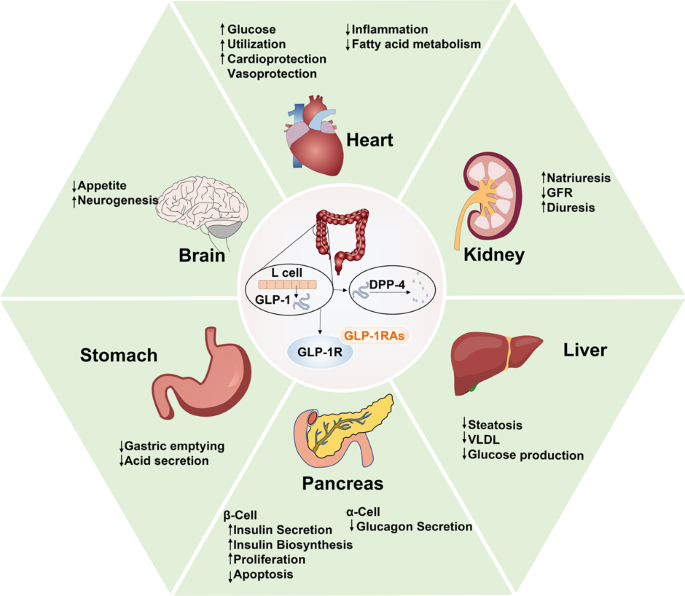
An educational overview of peptide quality control, including identity, purity, impurities, analytical characterization, and why QC matters in peptide development and manufacturing.
By LiyuPepLabs
An educational overview of retatrutide (LY3437943), an investigational triple GIP/GLP-1/glucagon receptor agonist being studied for obesity and type 2 diabetes, covering its structure, mechanism, pharmacokinetics, and clinical research.
By LiyuPepLabs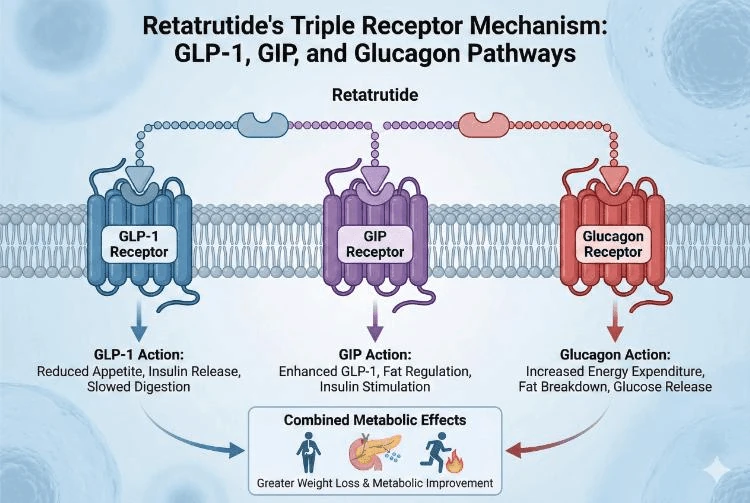
An educational overview of semaglutide, a long-acting GLP-1 receptor agonist used in type 2 diabetes and obesity, covering its mechanism, clinical applications, pharmacokinetics, oral formulation, and emerging research.
By LiyuPepLabs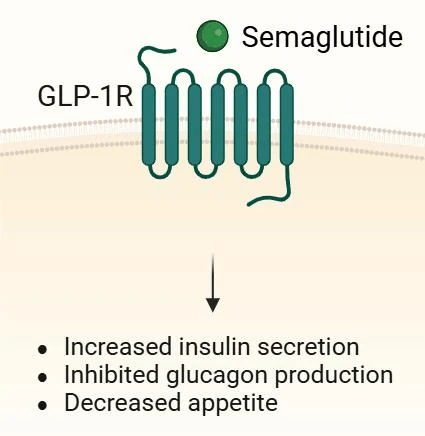
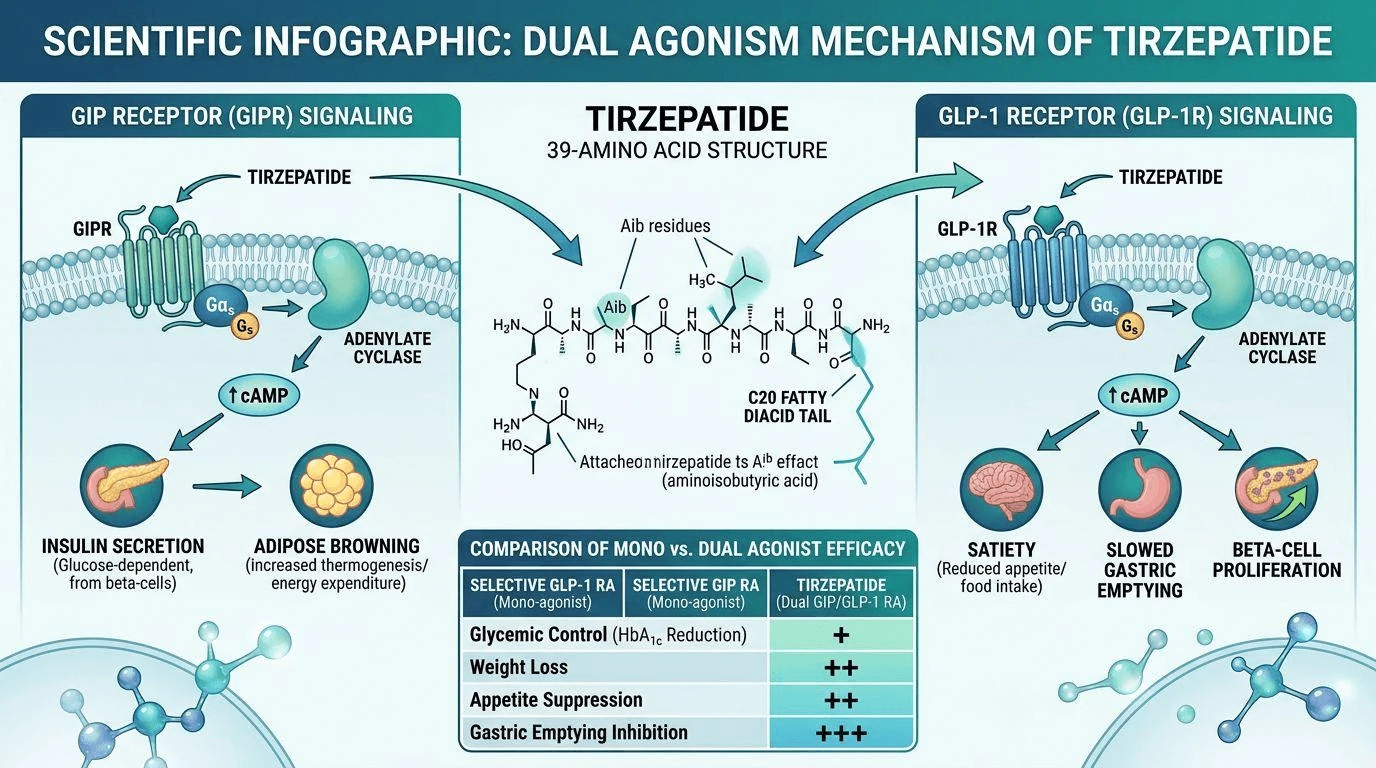
An educational overview of tirzepatide, a first-in-class dual GIP/GLP-1 receptor agonist used in type 2 diabetes and obesity, covering its structure, mechanism, pharmacokinetics, clinical development, and emerging research.
By LiyuPepLabs